| |
Copyright |
|
 |
 |
|
| |
| |
|
©2005 Jason Cross
All Rights Reserved
|
|
|
|
|

|
|
 Wednesday, September 29, 2004 Wednesday, September 29, 2004 |
 |
 |
|
 |
|
|
|
 |
|
|
| |
|
FactCheck.org - a non-partisan non-profit that fact-checks ads placed on both sides of the political spectrum, has released an analysis of the recent Bush-Cheney ad that paints Kerry as a flip-flopper on Iraq. They call the ad "the most egregious example so far in the 2004 campaign of using edited quotes in a way that changes their meaning and misleads voters". Here's what they say: Bush Ad Twists Kerry's Words on Iraq
Selective use of Kerry's own words makes him look inconsistent on Iraq. A closer look gives a different picture. Summary Kerry has never wavered from his support for giving Bush authority to use force in Iraq, nor has he changed his position that he, as President, would not have gone to war without greater international support. But a Bush ad released Sept. 27 takes many of Kerry's words out of context to make him appear to be alternately praising the war and condemning it. Here we present this highly misleading ad, along with what Kerry actually said, in full context. Analysis This ad is the most egregious example so far in the 2004 campaign of using edited quotes in a way that changes their meaning and misleads voters.
The Original Ad: Bush-Cheney '04
"Searching:" Bush: I'm George W. Bush and I approve this message. Kerry: It was the right decision to disarm Saddam Hussein, and when the President made the decision I supported him. Kerry: I don't believe the President took us to war as he should have. Kerry: The winning of the war was brilliant. Kerry: It's the wrong war, in the wrong place, at the wrong time. Kerry: I have always said we may yet even find weapons of mass destruction. Kerry: I actually did vote for the 87 billion dollars before I voted against it. (Graphic: How can John Kerry protect us . . .when he doesn't even know where he stands?)
"Right Decision" Kerry is shown saying it was "the right decision to disarm Saddam Hussein." What's left out is that he prefaced that by saying Bush should have made greater use of diplomacy to accomplish that. The quote is from May 3, 2003, at the first debate among Democratic presidential contenders, barely three weeks after the fall of Baghdad. The question was from ABC's George Stephanopoulos: Q: And Senator Kerry, the first question goes to you. On March 19th, President Bush ordered General Tommy Franks to execute the invasion of Iraq. Was that the right decision at the right time? Kerry: George, I said at the time I would have preferred if we had given diplomacy a greater opportunity, but I think it was the right decision to disarm Saddam Hussein, and when the President made the decision, I supported him, and I support the fact that we did disarm him.
(Note: We have added the emphasis in these and the following quotes to draw attention to the context left out by the Bush ad.)
"As he should have" The full "right decision" quote is actually quite consistent with the next Kerry quote, "I don't believe the President took us to war as he should have," which is from an interview with Chris Matthews on MSNBC's "Hardball" program Jan. 6, 2004: Q: Do you think you belong to that category of candidates who more or less are unhappy with this war, the way it's been fought, along with General Clark, along with Howard Dean and not necessarily in companionship politically on the issue of the war with people like Lieberman, Edwards and Gephardt? Are you one of the anti-war candidates? Kerry: I am -- Yes, in the sense that I don't believe the president took us to war as he should have, yes, absolutely. Do I think this president violated his promises to America? Yes, I do, Chris. Q: Let me... Kerry: Was there a way to hold Saddam Hussein accountable? You bet there was, and we should have done it right.
"Winning of the war was brilliant" When Kerry said "the winning of the war was brilliant" he wasn't praising Bush for waging the war, he was praising the military for the way they accomplished the mission. He also repeated his criticism of Bush for failing to better plan for what came next. This was also on "Hardball," May 19: Q: All this terrorism. If you were president, how would you stop it? Kerry: Well, it's going to take some time to stop it, Chris, but we have an enormous amount of cooperation to build one other countries. I think the administration is not done enough of the hard work of diplomacy, reaching out to nations, building the kind of support network. I think they clearly have dropped the ball with respect to the first month in the after -- winning the war. That winning of the war was brilliant and superb, and we all applaud our troops for doing what they did, but you've got to have the capacity to provide law and order on the streets and to provide the fundamentally services, and I believe American troops will be safer and America will pay less money if we have a broader coalition involved in that, including the United Nations.
"Wrong war, wrong place" When Kerry called Iraq "the wrong war, in the wrong place, at the wrong time" he was once again criticizing Bush for failing to get more international support before invading Iraq. He criticized Bush for what he called a "phony coalition" of allies: Kerry (Sept 6, 2004): You've got about 500 troops here, 500 troops there, and it's American troops that are 90 percent of the combat casualties, and it's American taxpayers that are paying 90 percent of the cost of the war . . . It's the wrong war, in the wrong place at the wrong time.
Earlier that same day at another campaign appearance he repeated pretty much what he's said all along: Kerry (Sept 6, 2004): "I would not have done just one thing differently than the president on Iraq, I would have done everything differently than the president on Iraq. I said this from the beginning of the debate to the walk up to the war. I said, 'Mr. President, don't rush to war, take the time to build a legitimate coalition and have a plan to win the peace ."
We May Find WMD's Nine months of fruitless searching have gone by since Kerry said on Dec. 14, 2003 that weapons of mass destruction might yet be found in Iraq. But what's most misleading about the Bush ad's editing is that it takes that remark out of a long-winded -- but still consistent -- explanation of Kerry's overall position on Iraq: The exchange was on Fox News Sunday, with host Chris Wallace: Q: But isn't it, in a realistic political sense going to be a much harder case to make to voters when you have that extraordinary mug shot of Saddam Hussein...looking like he's been dragged into a police line-up? Kerry: Absolutely not, because I voted to hold Saddam Hussein accountable. I knew we had to hold him accountable. There's never been a doubt about that. But I also know that if we had done this with a sufficient number of troops, if we had done this in a globalized way, if we had brought more people to the table, we might have caught Saddam Hussein sooner. We might have had less loss of life. We would be in a stronger position today with respect to what we're doing. Look, again, I repeat, Chris, I have always said we may yet even find weapons of mass destruction. I don't know the answer to that. We will still have to do the job of rebuilding Iraq and resolving the problem between Shias and Sunnis and Kurds. There are still difficult steps ahead of us. The question that Americans want to know is, what is the best way to proceed? Not what is the most lonely and single-track ideological way to proceed. I believe the best way to proceed is to bring other countries to the table, get some of our troops out of the target, begin to share the burden.
The $87 Billion
The final quote is the one in which the Bush ad takes its best shot. Kerry not only said it, he did it. He voted for an alternative resolution that would have approved $87 billion in emergency funds for troops and reconstruction in Iraq and Afghanistan, but it was conditioned on repealing much of Bush's tax cuts, and it failed 57-42. On the key, up-or-down vote on the $87 billion itself Kerry was only one of 12 senators in opposition, along with the man who later become his running mate, Sen. John Edwards. It's not only Bush who criticizes Kerry's inconsistency on that vote. Rival Democratic presidential candidate Joe Lieberman, a senator who also had voted to give Bush authority to use force in Iraq, said: "I don't know how John Kerry and John Edwards can say they supported the war but then opposed the funding for the troops who went to fight the war that the resolution that they supported authorized." Lieberman spoke at a candidate debate in Detroit Oct. 26, 2003. Another Democratic rival who criticized Kerry for that vote was Rep. Dick Gephardt, who said beforehand that he would support the $87 billion "because it is the only responsible course of action. We must not send an ambiguous message to our troops, and we must not send an uncertain message to our friends and enemies in Iraq." But aside from the $87 billion matter, this Bush ad is a textbook example of how to mislead voters through selective editing.
Sources: "Democratic Presidential Candidates Debate Sponsored by ABC News," Federal News Service, 3 May 2003. "Interview with John Kerry," MSNBC Hardball with Chris Matthews, 6 Jan 2004. "Interview with John Kerry," MSNBC Hardball with Chris Matthews, 19 May 2004. Lois Romano and Paul Farhi, "Kerry Attacks Bush on Handling of Iraq," The Washington Post 7 Sep 2004: A8. Calvin Woodward, "Kerry Slams 'Wrong War in the Wrong Place,'" The Associated Press , 6 Sep 2004. Fox News Sunday, "Interview with John Kerry," 14 December 2003. Adam Nagourney and Diane Cardwell, "Democrats in Debate Clash Over Iraq War," New York Times, 27 Oct 2003: A1. Joe Klein, "Profiles in Convenience," Time magazine, 19 Oct 2003.
|
| |
|
|
|
|
|
|
|
Sunday, September 26, 2004 |
|
|
|
|
|
|
|
|
|
|
|
| |
|
I'm in NYC right now, slipped onto some neighbor's wireless network. Will post some cliched photos of tall buildings upon my return Tuesday. Ian and Amit met Jess and I at La Guardia, went back to Amit and Joanne's apartment on the west side, had dinner in Weehawken NJ with Lena, Jay and Lena's parents who were in from Ukraine. Day two was brunch at Good, walking around the Village, SOHO and Midtown, buying some oddities at the market at Times Square, and Indian at Angon on Sixth. |
| |
|
|
|
|
|
|
|
|
|
|
|
|
|
| |
|
An interesting take on how Republicans of today are so much different than those of the earlier generations... We’re Not in Lake Wobegon Anymore How did the Party of Lincoln and Liberty transmogrify into the party of Newt Gingrich’s evil spawn and their Etch-A-Sketch president, a dull and rigid man, whose philosophy is a jumble of badly sutured body parts trying to walk? by Garrison Keillor / In These Times Something has gone seriously haywire with the Republican Party. Once, it was the party of pragmatic Main Street businessmen in steel-rimmed spectacles who decried profligacy and waste, were devoted to their communities and supported the sort of prosperity that raises all ships. They were good-hearted people who vanquished the gnarlier elements of their party, the paranoid Roosevelt-haters, the flat Earthers and Prohibitionists, the antipapist antiforeigner element. The genial Eisenhower was their man, a genuine American hero of D-Day, who made it OK for reasonable people to vote Republican. He brought the Korean War to a stalemate, produced the Interstate Highway System, declined to rescue the French colonial army in Vietnam, and gave us a period of peace and prosperity, in which (oddly) American arts and letters flourished and higher education burgeoned—and there was a degree of plain decency in the country. Fifties Republicans were giants compared to today’s. Richard Nixon was the last Republican leader to feel a Christian obligation toward the poor. In the years between Nixon and Newt Gingrich, the party migrated southward down the Twisting Trail of Rhetoric and sneered at the idea of public service and became the Scourge of Liberalism, the Great Crusade Against the Sixties, the Death Star of Government, a gang of pirates that diverted and fascinated the media by their sheer chutzpah, such as the misty-eyed flag-waving of Ronald Reagan who, while George McGovern flew bombers in World War II, took a pass and made training films in Long Beach. The Nixon moderate vanished like the passenger pigeon, purged by a legion of angry white men who rose to power on pure punk politics. “Bipartisanship is another term of date rape,” says Grover Norquist, the Sid Vicious of the GOP. “I don’t want to abolish government. I simply want to reduce it to the size where I can drag it into the bathroom and drown it in the bathtub.” The boy has Oedipal problems and government is his daddy. The party of Lincoln and Liberty was transmogrified into the party of hairy-backed swamp developers and corporate shills, faith-based economists, fundamentalist bullies with Bibles, Christians of convenience, freelance racists, misanthropic frat boys, shrieking midgets of AM radio, tax cheats, nihilists in golf pants, brownshirts in pinstripes, sweatshop tycoons, hacks, fakirs, aggressive dorks, Lamborghini libertarians, people who believe Neil Armstrong’s moonwalk was filmed in Roswell, New Mexico, little honkers out to diminish the rest of us, Newt’s evil spawn and their Etch-A-Sketch president, a dull and rigid man suspicious of the free flow of information and of secular institutions, whose philosophy is a jumble of badly sutured body parts trying to walk. Republicans: The No.1 reason the rest of the world thinks we’re deaf, dumb and dangerous. Rich ironies abound! Lies pop up like toadstools in the forest! Wild swine crowd round the public trough! Outrageous gerrymandering! Pocket lining on a massive scale! Paid lobbyists sit in committee rooms and write legislation to alleviate the suffering of billionaires! Hypocrisies shine like cat turds in the moonlight! O Mark Twain, where art thou at this hour? Arise and behold the Gilded Age reincarnated gaudier than ever, upholding great wealth as the sure sign of Divine Grace. Here in 2004, George W. Bush is running for reelection on a platform of tragedy—the single greatest failure of national defense in our history, the attacks of 9/11 in which 19 men with box cutters put this nation into a tailspin, a failure the details of which the White House fought to keep secret even as it ran the country into hock up to the hubcaps, thanks to generous tax cuts for the well-fixed, hoping to lead us into a box canyon of debt that will render government impotent, even as we engage in a war against a small country that was undertaken for the president’s personal satisfaction but sold to the American public on the basis of brazen misinformation, a war whose purpose is to distract us from an enormous transfer of wealth taking place in this country, flowing upward, and the deception is working beautifully. The concentration of wealth and power in the hands of the few is the death knell of democracy. No republic in the history of humanity has survived this. The election of 2004 will say something about what happens to ours. The omens are not good. Our beloved land has been fogged with fear—fear, the greatest political strategy ever. An ominous silence, distant sirens, a drumbeat of whispered warnings and alarms to keep the public uneasy and silence the opposition. And in a time of vague fear, you can appoint bullet-brained judges, strip the bark off the Constitution, eviscerate federal regulatory agencies, bring public education to a standstill, stupefy the press, lavish gorgeous tax breaks on the rich. There is a stink drifting through this election year. It isn’t the Florida recount or the Supreme Court decision. No, it’s 9/11 that we keep coming back to. It wasn’t the “end of innocence,” or a turning point in our history, or a cosmic occurrence, it was an event, a lapse of security. And patriotism shouldn’t prevent people from asking hard questions of the man who was purportedly in charge of national security at the time. Whenever I think of those New Yorkers hurrying along Park Place or getting off the No.1 Broadway local, hustling toward their office on the 90th floor, the morning paper under their arms, I think of that non-reader George W. Bush and how he hopes to exploit those people with a little economic uptick, maybe the capture of Osama, cruise to victory in November and proceed to get some serious nation-changing done in his second term. This year, as in the past, Republicans will portray us Democrats as embittered academics, desiccated Unitarians, whacked-out hippies and communards, people who talk to telephone poles, the party of the Deadheads. They will wave enormous flags and wow over and over the footage of firemen in the wreckage of the World Trade Center and bodies being carried out and they will lie about their economic policies with astonishing enthusiasm. The Union is what needs defending this year. Government of Enron and by Halliburton and for the Southern Baptists is not the same as what Lincoln spoke of. This gang of Pithecanthropus Republicanii has humbugged us to death on terrorism and tax cuts for the comfy and school prayer and flag burning and claimed the right to know what books we read and to dump their sewage upstream from the town and clear-cut the forests and gut the IRS and mark up the constitution on behalf of intolerance and promote the corporate takeover of the public airwaves and to hell with anybody who opposes them. This is a great country, and it wasn’t made so by angry people. We have a sacred duty to bequeath it to our grandchildren in better shape than however we found it. We have a long way to go and we’re not getting any younger. Dante said that the hottest place in Hell is reserved for those who in time of crisis remain neutral, so I have spoken my piece, and thank you, dear reader. It’s a beautiful world, rain or shine, and there is more to life than winning.
|
| |
|
|
|
|
|
|
|
Tuesday, September 21, 2004 |
|
|
|
|
|
|
|
|
|
|
|
|
Monday, September 20, 2004 |
|
|
|
|
|
|
|
|
|
|
|
| |
|
From Byron Williams on Working for Change: Perhaps Kerry's not lone flip-flopper
Has Bush ever changed his mind? What does it mean to flip-flop? Clearly it is a political pejorative, but what does it really denote? Is flip-flop to politicians what rabies is to a dog? Is it simply a case of an elected official changing his or her position?
Recently, several Bush supporters took issue with my suggesting that the president's stance on winning the war on terror was indeed a flip-flop. In addition to calling me "terminally stupid" and reminding me of Sen. John Kerry's numerous flip-flops over the years, one individual posed a direct question: "How can anyone support a candidate who flip-flops?" His question gave me cause for self-reflection. My terminal stupidity notwithstanding, I ultimately came to the conclusion that the gentleman was correct. How could anyone support a candidate who flip-flops? Americans want a guy who says what he means and does not deviate. We want Howard Roarke incarnate! I thought how fortunate we were to have a president who was immune from flip-flops. Could you imagine if President Bush were guilty of flip-flopping? That might change the whole rationale for supporting his candidacy. I realize that there is no chance of this occurring, but suppose, hypothetically speaking of course, the president did flip-flop. We might experience the following: The president would have been opposed to campaign finance reform and then supported it. The president would have been against a Homeland Security Department and then supported it. The president would have been against a 9/11 Commission and then supported it. The president would have been against nation-building during the presidential campaign, and then not only supported it, but made it a key component in his reelection pitch. The president would have taken the position that it was up to the states to decide on gay marriage, and then changed his position by advocating a federal constitutional amendment that would prohibit same-sex matrimony. The president could have claimed that he was the "education president," and then failed to fully fund key education programs. The president could have been an advocate for fingerprinting and photographing Mexicans who enter the U.S., then met with Mexican President Fox and decided against it. The president would have been opposed to National Security Advisor Condoleezza Rice testifying in front of the 9/11 Commission citing "separation of powers," then later decided he was for her testifying. Suppose the president supported free trade, then, because of Pennsylvania's 21 electoral votes, supported tariffs on steel, then opposed the tariffs, and was now back to supporting free trade? What if the president was against Iraq's Ba'ath party members holding office or government jobs in Iraq, then changed his mind? Imagine if the president said we must not appease terrorists, then lifted trade sanctions on Pakistan, which pardoned its official who sold nuclear secrets to Iran, Libya and North Korea? If Bush administration officials had said that the Geneva Conventions don't apply to "enemy combatants," and now claimed they do, would that be considered a flip-flop? What if the president had made the following two quotes? "The most important thing is for us to find Osama Bin Laden. It is our No. 1 priority and we will not rest until we find him." -- George W. Bush, Sept. 13, 2001. "I don't know where he is. I have no idea, and I really don't care. It's not that important. It's not our priority." -- George W. Bush, March 13, 2002. Should those who dwell in glass houses or run political office refrain from throwing stones? Since my list is "hypothetical," supporters of the president can rest in the comfort of criticizing Kerry as the sole flip-flopper in the campaign. P.S. Please note that I did not include WMD, imminent threat, link between Saddam and al-Qaida or "Mission Accomplished" in any of my hypothetical examples.
|
| |
|
|
|
|
|
|
|
Friday, September 10, 2004 |
|
|
|
|
|
|
|
|
|
|
|
| |
|
Scott Bateman just posted this to his blog: I just posted as a reply to a comment, but I feel like I ought to post it here in the main part of my journal, too. - There's some talk in the news today that the documents used in their 60 Minutes piece on Bush's Air National Guard years are forgeries.
- That contention is based on two faulty premises:
- That "proportional type" didn't exist before the 1980s, which is patently untrue--IBM started marketing typewriters with proportional type in 1941; by the late 1960s, IBM typewriters with that featue were very common in the workplace (IBM being, after all, the world leader in business machines at the time).
That the superscript "th" could only have been done in Microsoft Word. In fact, IBM made typewriters with superscripts like "th" and "st." Plus, if you look at the "th," it's not spaced the same way it is in Microsoft Word.
- Apparently, the "expert" the Washington Post interviewed is simply a general forensics expert who called the docs forgeries based only on the superscript "th"--it's pretty sad when a cartoonist knows more about typewriters than somebody who gets paid to be an "expert" on this crap.
- Also--even IF the documents are forgeries? The White House has NOT disputed ANY of the facts in the documents. And it still doesn't change the fact that Bush didn't show up anywhere to serve in the National Guard when he moved to Boston to go to Harvard Business School, or that he disobeyed a direct order--these facts appear elsewhere in non-disputed documents.
- This is simply the wingnuts trying to change the subject when they can't win the argument on the merits. AGAIN.
Update: The Daily Kos has a great follow-up to this with detail on how these documents most likely WERE made with a typewriter rather than Word. |
| |
|
|
|
|
|
|
|
|
|
|
|
|
|
| |
|
Day in the Life of Joe Middle-Class Republican
by John Gray Joe gets up at 6:00am to prepare his morning coffee. He fills his pot full of good clean drinking water because some liberal fought for minimum water quality standards. He takes his daily medication with his first swallow of coffee. His medications are safe to take because some liberal fought to insure their safety and work as advertised. All but $10.00 of his medications are paid for by his employers medical plan because some liberal union workers fought their employers for paid medical insurance, now Joe gets it too. He prepares his morning breakfast, bacon and eggs this day. Joe’s bacon is safe to eat because some liberal fought for laws to regulate the meat packing industry. Joe takes his morning shower reaching for his shampoo; His bottle is properly labeled with every ingredient and the amount of its contents because some liberal fought for his right to know what he was putting on his body and how much it contained. Joe dresses, walks outside and takes a deep breath. The air he breathes is clean because some tree hugging liberal fought for laws to stop industries from polluting our air. He walks to the subway station for his government subsidized ride to work; it saves him considerable money in parking and transportation fees. You see, some liberal fought for affordable public transportation, which gives everyone the opportunity to be a contributor. Joe begins his work day; he has a good job with excellent pay, medicals benefits, retirement, paid holidays and vacation because some liberal union members fought and died for these working standards. Joe’s employer pays these standards because Joe’s employer doesn’t want his employees to call the union. If Joe is hurt on the job or becomes unemployed he’ll get a worker compensation or unemployment check because some liberal didn’t think he should lose his home because of his temporary misfortune. Its noon time, Joe needs to make a Bank Deposit so he can pay some bills. Joe’s deposit is federally insured by the FSLIC because some liberal wanted to protect Joe’s money from unscrupulous bankers who ruined the banking system before the depression. Joe has to pay his Fannie Mae underwritten Mortgage and his below market federal student loan because some stupid liberal decided that Joe and the government would be better off if he was educated and earned more money over his life-time. Joe is home from work, he plans to visit his father this evening at his farm home in the country. He gets in his car for the drive to dads; his car is among the safest in the world because some liberal fought for car safety standards. He arrives at his boyhood home. He was the third generation to live in the house financed by Farmers Home Administration because bankers didn’t want to make rural loans. The house didn’t have electric until some big government liberal stuck his nose where it didn’t belong and demanded rural electrification. (Those rural Republican’s would still be sitting in the dark) He is happy to see his dad who is now retired. His dad lives on Social Security and his union pension because some liberal made sure he could take care of himself so Joe wouldn’t have to. After his visit with dad he gets back in his car for the ride home. He turns on a radio talk show, the host’s keeps saying that liberals are bad and conservatives are good. (He doesn’t tell Joe that his beloved Republicans have fought against every protection and benefit Joe enjoys throughout his day) Joe agrees, “We don’t need those big government liberals ruining our lives; after all, I’m a self made man who believes everyone should take care of themselves, just like I have”.
|
| |
|
|
|
|
|
|
|
Tuesday, September 7, 2004 |
|
|
|
|
|
|
|
|
|
|
|
| |
|
From Fred Kaplan at Slate: Lies, Damned Lies, and Convention Speeches
Setting Kerry's record right—again.
By Fred Kaplan
Posted Thursday, Sept. 2, 2004, at 11:50 AM PT Half-truths and embellishments are one thing; they're common at political conventions, vital flourishes for a theatrical air. Lies are another thing, and last night's Republican convention was soaked in them. In the case of Sen. Zell Miller's keynote address, "lies" might be too strong a word. Clearly not a bright man, Miller dutifully recited the talking points that his Republican National Committee handlers had typed up for him, though perhaps in a more hysterical tone than anyone might have anticipated. (His stumbled rantings in the interviews afterward, on CNN and MSNBC, brought to mind the flat-Earthers who used to be guests on The Joe Pyne Show.) Can a puppet tell lies? Perhaps not. Still, it is worth setting the record straight. The main falsehood, we have gone over before (click here for the details), but it keeps getting repeated, so here we go again: It is the claim that John Kerry, during his 20 years in the Senate, voted to kill the M-1 tank, the Apache helicopter; the F-14, F-16, and F-18 jet fighters; and just about every other weapon system that has kept our nation free and strong. Here, one more time, is the truth of the matter: Kerry did not vote to kill these weapons, in part because none of these weapons ever came up for a vote, either on the Senate floor or in any of Kerry's committees. This myth took hold last February in a press release put out by the RNC. Those who bothered to look up the fine-print footnotes discovered that they referred to votes on two defense appropriations bills, one in 1990, the other in 1995. Kerry voted against both bills, as did 15 other senators, including five Republicans. The RNC took those bills, cherry-picked some of the weapons systems contained therein, and implied that Kerry voted against those weapons. By the same logic, they could have claimed that Kerry voted to disband the entire U.S. armed forces; but that would have raised suspicions and thus compelled more reporters to read the document more closely. What makes this dishonesty not merely a lie, but a damned lie, is that back when Kerry cast these votes, Dick Cheney—who was the secretary of defense for George W. Bush's father—was truly slashing the military budget. Here was Secretary Cheney, testifying before the Senate Armed Services Committee on Jan. 31, 1992: Overall, since I've been Secretary, we will have taken the five-year defense program down by well over $300 billion. That's the peace dividend. … And now we're adding to that another $50 billion … of so-called peace dividend.
Cheney then lit into the Democratic-controlled Congress for not cutting weapons systems enough: Congress has let me cancel a few programs. But you've squabbled and sometimes bickered and horse-traded and ended up forcing me to spend money on weapons that don't fill a vital need in these times of tight budgets and new requirements. … You've directed me to buy more M1s, F14s, and F16s—all great systems … but we have enough of them.
I'm not accusing Cheney of being a girly man on defense. As he notes, the Cold War had just ended; deficits were spiraling; the nation could afford to cut back. But some pro-Kerry equivalent of Arnold Schwarzenegger or Zell Miller could make that charge with as much validity as they—and Cheney—make it against Kerry. In other words, it's not just that Cheney and those around him are lying; it's not even just that they know they're lying; it's that they know—or at least Cheney knows—that the same lie could be said about him. That's what makes it a damned lie. Before moving on to Cheney's speech, we should pause to note two truly weird passages in Zell's address. My favorite: Today, at the same time young Americans are dying in the sands of Iraq and the mountains of Afghanistan, our nation is being torn apart and made weaker because of a Democrat's manic obsession to bring down our commander in chief.
A "manic obsession to bring down our commander in chief"? Most people call this a "presidential election." Someone should tell Zell they happen every four years; he can look it up in that same place where he did the research on Kerry's voting record ("I've got more documents," he said on CNN, waving two pieces of paper that he'd taken from his coat pocket, "than in the Library of Congress and the New York Public Library combined.") The other oddball remark: "Nothing makes me madder than someone calling American troops occupiers rather than liberators." Huge applause line, but is he kidding? The U.S. troops in Iraq are occupiers. Even Bush has said so. If he doesn't understand this, then he doesn't understand what our problems are. Cheney followed Zell, and couldn't help but begin with … not a lie, but certainly a howler: "People tell me Sen. Edwards got picked for his good looks, his sex appeal, his charm, and his great hair. [Pause] I said, 'How do you think I got the job?' " Funny, apparently self-deprecating line, but does anybody remember how he did get the job? Bush had asked Cheney to conduct the search for a vice presidential candidate, and he came up with himself. He got the job because he picked himself. Later in the speech, Cheney made this comment: "Four years ago, some said the world had grown calm, and many assumed that the United States was invulnerable to danger. That thought might have been comforting; it was also false." Who are these people who thought this? The implication is that it was the Democrats who preceded Bush and Cheney. But it was Bill Clinton's administration that stopped the millennium attack on LAX. It was Clinton's national security adviser who told Condoleezza Rice, during the transition period, that she'd be spending more time on al-Qaida that on any other issue. It was Rice who didn't call the first Cabinet meeting on al-Qaida until just days before Sept. 11. It was Bush's attorney general who told a Justice Department assistant that he didn't want to hear anything more about counterterrorism. It was Bush who spent 40 percent of his time out of town in his first eight months of office, while his CIA director and National Security Council terrorism specialists ran around with their "hair on fire," trying to get higher-ups to heed their warnings of an imminent attack. "President Bush does not deal in empty threats and halfway measures," Cheney said. What is an empty threat if not the warnings Bush gave the North Koreans to stop building a nuclear arsenal? What is a halfway measure if not Bush's decision to topple the Taliban yet leave Afghanistan to the warlords and the poppy farmers; to bust up al-Qaida's training camps yet fail to capture Osama Bin Laden (whose name has virtually gone unmentioned at this convention); to topple the Iraqi regime yet plan nothing for the aftermath? "Time and again Sen. Kerry has made the wrong call on national security," Cheney said. The first example he cited of these wrong calls: "Sen. Kerry began his political career by saying he would like to see our troops deployed 'only at the directive of the United Nations.' " Yes, Kerry did say this—in 1971, to the Harvard Crimson. He has long since recanted it. Is there evidence that George W. Bush said anything remarkable, whether wise or naive, in his 20s? The second example of Kerry's wrong calls: "During the 1980s, Sen. Kerry opposed Ronald Reagan's major defense initiative that brought victory in the Cold War." We've been over this—unless Cheney is talking about the Strategic Defense Initiative, aka the "star wars" missile-defense plan. It may be true that SDI played some role in prompting the Soviet Union's conciliation, though it was at best a minor role—and wouldn't have been even that, had it not been for Mikhail Gorbachev. But two more points should be made. First, lots of lawmakers opposed SDI; almost no scientist thought it would work, especially as Reagan conceived it (a shield that would shoot down all nuclear missiles and therefore render nukes "impotent and obsolete"). Second, Kerry voted not to kill SDI, but to limit its funding. "Even in the post-9/11 period," Cheney continued, "Sen. Kerry doesn't appear to understand how the world has changed. He talks about leading a 'more sensitive war on terror,' as though al-Qaida will be impressed with our softer side." A big laugh line, as it was when Cheney first uttered it on Aug. 12 before a group of veterans. But Cheney knows this is nonsense. Here's the full Kerry quote, from an address to journalists on Aug. 5: "I believe I can fight a more effective, more thoughtful, more strategic, more proactive, more sensitive war on terror that reaches out to other nations and brings them to our side." In context, it's clear that "sensitive," a word that has several definitions, is not meant as a synonym for "soft." And Cheney, who is not a stupid man, knows this. "He declared at the Democratic Convention," Cheney said of Kerry, "that he will forcefully defend America after we have been attacked. My fellow Americans, we have already been attacked." Where in Kerry's speech did he say this? Nowhere. "Sen. Kerry denounces American action when other countries don't approve," Cheney continued, "as if the whole object of our foreign policy were to please a few persistent countries." No, that's not it. Kerry thinks that other countries should go along with our actions—that a president must work hard at diplomacy to get them to go along with us—because going it alone often leads to failure. Cheney should ask his old colleague Brent Scowcroft or his old boss W's father about this. Or he should simply go to Iraq and see what unilateralism has wrought. Fred Kaplan writes the "War Stories" column for Slate.
|
| |
|
|
|
|
|
|
|
Saturday, September 4, 2004 |
|
|
|
|
|
|
|
|
|
|
|
| |
|
From FAIR: If Only They Had Invented the Internet:
The Failure of Fact-Checking at the Republican Convention September 3, 2004 It is the function of journalism to separate fact from fiction. In covering the Republican National Convention of 2004, the media made isolated efforts to point out some of the convention speakers' more egregious distortions, but on the whole failed in their vital role of letting citizens know when they are being lied to. To take the example that dominated the convention perhaps more than any other claim: Professional politicians and political correspondents alike know that legislators frequently vote against appropriations for a variety of reasons, even though they do not seek to eliminate the programs being voted on. They know that different versions of the same appropriation are often offered, and that lawmakers will sometimes vote for one version and against another-- not because they suffer from multiple personality disorder, but because that's how they express disagreements about how government programs should be funded. No one who has spent any amount of time in or around government would find this the least bit confusing. Yet news analysts generally allowed Republican Party leaders to pretend shock that Sen. John Kerry would vote against an $87 billion appropriation for the Iraq War-- as if this meant that Kerry opposed giving troops "money for bullets, and fuel, and vehicles, and body armor," as George W. Bush declared ( 9/2/04). (The references to Kerry voting against body armor were particularly disingenuous, given that the $87 billion only included money for body armor at the insistence of congressional Democrats-- Army Times, 10/20/03.) And journalists were complacent as Republicans expressed mock bafflement over why Kerry would vote against this bill when he had voted for another version of the bill (or "exactly the same thing," in former New York Mayor Rudolph Giuliani's words-- 8/30/04). The reason that Kerry introduced an alternative bill-- because he wanted to pay for the appropriation by raising taxes on the wealthy rather than through deficit spending-- was well-publicized at the time (Washington Post, 9/18/03). Yet rather than challenging the dishonesty of this centerpiece of the Republican attack on Kerry, CNN's Jeff Greenfield after Bush's speech (9/2/04) called it "one of the most familiar and effective lines of his stump speech." Bush himself threatened to veto the Iraq spending bill if the reconstruction aid for Iraq it included was in the form of loans rather than grants; by the logic of the Republican convention, Bush "flip-flopped" exactly the same way that Kerry did on the $87 billion by supporting one version of the bill and opposing another. Yet a Nexis search of television coverage of the convention turns up only one reference to Bush's veto of the bill, by Paul Begala on CNN ( 9/1/04). Overwhelmingly, TV pundits covering the convention allowed the charade surrounding the $87 billion to pass without critical comment. But overlooking distortions was the norm in television's coverage of the convention. When Dick Cheney spoke ( 9/1/04), he said of Kerry: "He declared at the Democratic Convention that he will forcefully defend America after we have been attacked.... We cannot wait for the next attack. We must do everything we can to prevent it and that includes the use of military force." Kerry did say in that speech (7/29/04), "I will never hesitate to use force when it is required. Any attack will be met with a swift and a certain response. " But he couldn't have meant that that was the only time military force might be required, since he had said earlier in the speech that "the only justification for going to war" is "to protect the American people, fundamental American values from a threat that was real and imminent." Cheney went on to say, "Senator Kerry denounces American action when other countries don't approve as if the whole object of our foreign policy were to please a few persistent critics." In this he echoed Sen. Zell Miller ( 9/1/04), who charged, "Senator Kerry has made it clear that he would use military force only if approved by the United Nations." In his acceptance speech, Kerry actually said, "I will never give any nation or international institution a veto over our national security." Miller and Cheney's speeches were filled with similar misrepresentations of Kerry's positions and record. Yet afterwards, Newsweek managing editor Jon Meacham, appearing as a pundit on MSNBC ( 9/1/04), had this analysis: If I taught at the Kennedy School, I would take these two speeches as ur-text of partisan rhetoric. I think it was a brilliant tactical night, one of the most brilliant in the age of television. These were two concise, rather devastating rhetorical hits at John Kerry. And there was just-- they did not miss a base. They did not miss anything that they could hit.
It's not that journalists never attempt to fact-check claims made in political speeches-- sometimes effectively, sometimes less so. (A couple of the better efforts were by AP's Calvin Woodward-- 9/2/04-- and the Washington Post's Glenn Kessler and Dan Morgan, 9/3/04). But these efforts are generally segregated from regular news coverage of the convention, not incorporated into the main reports and analysis, as if sorting out what's true and what isn't were a departure from normal journalistic practice. When MSNBC's Chris Matthews ( 9/1/04) questioned Miller about the fairness of his litany of weapons programs that Kerry "tried his best to shut down," he was following a line of debunking that was laid out six months ago by Slate's Fred Kaplan ( 2/25/04), who pointed out that Republicans were citing Kerry's "no" vote on the 1991 Defense appropriations bill as if it were an attempt to eliminate all Pentagon spending. What was remarkable was that Matthews was willing to bring up this criticism in a live interview-- a breach of media operating procedure so dramatic that it provoked Miller to say he "wish[ed] we lived in the day where you could challenge a person to a duel." But ascertaining the truth is the responsibility of every journalist in every story. It's the first point in the Society of Professional Journalists' code of ethics: "Journalists should test the accuracy of information from all sources." It's the ubiquitous reports that analyze the aesthetics of oratory and speculate on the impact speeches will have on the horserace that ought to be the exception. It would hardly be unprecedented for the media to consistently call attention to the veracity of a political campaign. During the 2000 campaign, reporters and pundits delighted in pointing out examples of what they said were "exaggerations" by Vice President Al Gore. Unfortunately, these examples were often false-- contrary to more than a thousand media assertions, Gore never claimed to have "invented" the Internet, and he actually did serve as a model for the character in Love Story, according to the novel's author (Daily Howler, 12/7/99, 12/3/02). It's telling that when faced with real distortions, not on trivial matters of little consequence to voters or the campaign, but on life-or-death matters that are central to the presidential debate, most journalists become agnostics regarding the truth or falsity of the smears they pass along.
|
| |
|
|
|
|
|
|
|
|
|
|
|
|
|
| |
|
From the AP: Bush Glosses Over Complex Facts in Speech In Convention Speech, Bush Glosses Over Some Complex Facts About Iraq Coalition, Terror War The Associated Press NEW YORK Sept. 3, 2004 — President Bush glossed over some complicating realities in Iraq, Afghanistan and the home front in arguing the case Americans are safer and his opponent cannot deliver. On Iraq, Bush talked of a 30-member alliance standing shoulder to shoulder with the United States, masking the fact that U.S. troops are pulling by far most of the weight. On Afghanistan and its neighbors, he gave an accounting of captured or killed terrorists, but did not address the replenishment of their ranks or the still-missing Osama bin Laden. Bush's acceptance speech Thursday night conveyed facts that told only part of the story, hardly unusual for this most political of occasions. He took some license in telling Americans that Democratic opponent John Kerry "is running on a platform of increasing taxes." Kerry would, in fact, raise taxes on the richest Americans but as part of a plan to keep the Bush tax cuts for everyone else and even cut some of them more. That's not a tax-increase platform any more than Bush's plan for private retirement accounts is a platform to reduce Social Security benefits. And on education, Bush voiced an inherent contradiction, dating back to his 2000 campaign, in stating his stout support for local control of education, yet promising to toughen federal standards that override local decision-making. "We are insisting on accountability, empowering parents and teachers, and making sure that local people are in charge of their schools," he said, on one hand. Yet, "we will require a rigorous exam before graduation." On Iraq, Bush derided Kerry for devaluing the alliance that drove out Saddam Hussein and is trying to rebuild the country. "Our allies also know the historic importance of our work," Bush said. "About 40 nations stand beside us in Afghanistan, and some 30 in Iraq." But the United States has more than five times the number of troops in Iraq than all the other countries put together. And, with 976 killed, Americans have suffered nearly eight times more deaths than the other allies combined. Bush aggressively defended progress in Afghanistan, too. "Today, the government of a free Afghanistan is fighting terror, Pakistan is capturing terrorist leaders ... and more than three-quarters of al-Qaida's key members and associates have been detained or killed. We have led, many have joined, and America and the world are safer." Nowhere did Bush mention bin Laden, nor did he account for the replacement of killed and captured al al-Qaida leaders by others. He attacked Kerry for voting against an $87 billion package for Iraq and Afghanistan operations that included money for extra sets of body armor and other supplies, mocking his opponent for saying the issue was complicated. "There's nothing complicated about supporting our troops in combat," Bush said. But the bill in question was not solely about supporting troops and Kerry's campaign said he ultimately voted against it because, among other reasons, it included no-bid contracts for companies. Kathleen Hall Jamieson, who tracks the accuracy of campaign rhetoric at the University of Pennsylvania's Annenberg School for Communication, said Bush overstepped on a few claims about Kerry. "The speech distorts Kerry's positions by suggesting that he opposed Medicare reform when he instead favored an alternative, and opposed tax cuts for all when he in fact supported the middle class cuts and opposed cuts for those making more than $200,000," she said. And on Bush's second-term domestic initiatives, she was not surprised to find missing dollar signs. "One expects acceptance speeches to make grand promises without specifying the ways that the money will be raised to pay for them," she said. "This speech is no exception." Eds: Associated Press writer Sharon Theimer contributed to this report.
Note: emphasis mine |
| |
|
|
|
|
|
|
|
Thursday, September 2, 2004 |
|
|
|
|
|
|
|
|
|
|
|
| |
|
Listing all the weapon systems that Senator Kerry tried his best to shut down sounds like an auctioneer selling off our national security. ... For more than 20 years, on every one of the great issues of freedom and security, John Kerry has been more wrong, more weak, and more wobbly than any other national figure.
—Sen. Zell Miller, "D"-Ga., Sept. 1, 2004 My job tonight is an easy one: to present to you one of this nation's authentic heroes, one of this party's best-known and greatest leaders—and a good friend. ... John has worked to strengthen our military. ...
—Sen. Zell Miller, D-Ga., March 1, 2001 |
| |
|
|
|
|
|
|
|
|
|
|
|
|
|
| |
|
On a conference call this morning, a co-worker (and major Bush fan) said how much he loved Zell Miller, describing him as "an old time Democrat". I believe he'd more aptly be described as a "Republican-If-Not-In-Name". That, or "Crazy".
Ask not at whom the Zell boils, he boils at thee (Keith Olbermann) Can’t we all just get along? In the first fifteen minutes of shared downtime we’ve had since a photo shoot we did last spring, Chris Matthews and I ran into one another smack dab in the middle of Broadway yesterday and, as the old time throng swept past us into Herald Square, we had our usual conversation: politics, movies, a little sports, television executives— all of it punctuated with his laugh (“Ha!”) and mine (“Huh!”). The process is simple and productive: Give Chris a straight answer, let him talk, pick up your point when he’s stopped talking, share the oxygen with him, and everything’ll be just fine. Seven hours later, Senator Zell Miller goes all Aaron Burr on him and fantasizes about challenging him to a duel. Here’s a man who in a historical-blink-of-an-eye ago was calling John Kerry a hero and swearing the Republicans had ‘sold the country out,’ fresh off a fear-mongering speech that made his '92 keynote for Bill Clinton sound like a schoolmarm talking to a bankruptcy referee, and Miller gets mad at Matthews? The gist of the message from the Democrat and/or Republican was: vote for John Kerry and America will be attacked. And when it’s attacked, it’ll be defended with “spitballs.” So Chris asked him if he really meant that. “It’s a metaphor,” Miller replied. “Do you know what a metaphor is?” Umm, Senator? That’s why he asked. Did you really mean that metaphor? Wasn’t that metaphor over-the-top? Isn’t it predicated on a half-idea: that John Kerry tried to dismantle weapons programs (the ones Defense Secretary Dick Cheney had asked the Senate to dismantle)? Of course, Senator Miller can’t answer those questions. He's a one-man political revolving door trying to lead the criticism of a flip-flopper. So all of a sudden he’s slapping a white glove, throwing down the gauntlet, and checking the newspaper for the exact hour of sunrise. Senator— you have the first choice of spitballs. Matthews can talk to anybody, and listen to anybody. You just have to get with the rhythm a little bit. Bend slightly. Flex. You know, the kind of bending and flexing you have to do when you want to come out and condemn both major political parties in the same decade. And incidentally, Senator, the show is called Hardball, not Spitball. Although if my bosses are watching, I think we have the title for a new program.
|
| |
|
|
|
|
|
|
|
|
|
|
|
|
|
| |
|
This one goes out to a newly returned friend...
President Bush photographed wearing Air Force award he never earned
One Air Force office confirms story, but Air Force public affairs office pleads ignorance, gives out White House comment line.
By John Byrne | Raw Story Editor A closer examination of a photograph included in President George W. Bush’s Air Force records, released by the White House earlier this year, shows then-Second Lieutenant Bush wearing an Air Force Outstanding Unit Award which he never earned. Additionally, Lieutenant Bush would not have been authorized to wear the ribbon temporarily, the Air Force Personnel Center said in an email. “There isn’t a ‘temporary’ wear of AF Outstanding Unit Awards for AF personnel,” the Air Force Personnel Center stated. “I’ve never heard of temporary wear,” added Assistant Reagan Defense Secretary for Manpower, Reserve Affairs, Installations and Logistics Lawrence J. Korb, whose job included overseeing the Air Force Reserves from 1981-1985, in a telephone interview Wednesday. “The unit didn’t get this until 1975.” The Air Force Public Affairs office tried to answer an inquiry, but went silent and said they just didn’t have enough information to answer after they heard the query was on President Bush. They deferred comment to the White House, and supplied the White House comment phone line. RAW STORY reached the White House Press Office through the main switchboard, and a spokeswoman said they would look into it and return the call as soon as possible. “We’re very short staffed this week,” she said, referring to the Republican National Convention. The London-based newspaper The Telegraph sought comment on the issue Sunday but received no response. The Air Force Historical Research Service Organization confirmed that the 147th Fighter Intercept Group and the 111th Fighter Intercept Squadron received an Air Force Outstanding Unit Award for the time period of 1965-1966, two years before Bush joined the service.  The Air Force also said both units received the Outstanding Unit Award in 1975. Bush was discharged from his Texas Guard unit on Oct. 1, 1973. The Air Force also said both units received the Outstanding Unit Award in 1975. Bush was discharged from his Texas Guard unit on Oct. 1, 1973.
Between these dates, the Air Force said Wednesday, there are “no additional awards.” More importantly, however, the above photograph had to have been taken some time between his qualifying as a pilot–since he is wearing his pilots’ wings–on November 26, 1969 and his promotion to First Lieutenant on November 7, 1970, since he is listed as a Second Lieutenant (see photograph below). Bush earned his pilots’ wings on Nov. 29, 1969, according to his White House military biography. His biography does not list that he was awarded the Air Force Oustanding Unit Award. American media, having focused for more than three weeks on Swift Boat veterans’ attacks on Sen. John Kerry’s Vietnam service, has yet to report the story. It has, however, appeared in the The Telegraph, which carried a brief piece on the charges Aug. 29. Walt Starr, a researcher, first reported the story in the popular liberal forum, Democratic Underground, on Aug. 23. Punishment for wearing an award one hasn’t earned is punishable by bad-conduct discharge, forfeiture of all pay and allowances, and/or confinement for 6 months under the Uniform Code of Military Justice. DEVELOPING…. Keep your eye on the main Raw Story page for updates.
Update: While I do agree that the source is rather radical, I don't think that it reflects on the facts that A) the image above was released by the Bush campaign and B) Bush is shown wearing a medal he didn't earn. Of course, he also once claimed to have been active Air Force when in reality he was just training there for the Guard, so we know he gets confused about those things easily. Update 2: One intrepid reader points out that The Air Force Distinguished Flying medal or The Organizational Excellence Award might be what Bush is wearing, as it's a black and white photo and they look similar. 
The Air Force Distinguished Flying medal

The Organizational Excellence Award
While those are similar, look at a close up of the mystery Bush award and the Air Force Outstanding Unit Award: 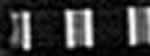
While in black and white, the award worn by Bush is clearly light color | white | dark color | white | light color | white | dark color | white | light color. This would not match the Organizational Excellence Award, which is the opposite in terms of light color / dark color. The black and white award would also appear to have the white stripes be of uniform width. This would not match the Distinguished Flying medal as is inner stripes are have as narrow as its outer stripes. The last question brought up is: why does this matter? Because I hear from people all the time about how "John Kerry didn't deserve his purple hearts", that "John Kerry wounded himself to get a purple heart", or that "one of John Kerry's medals was only turned in when he did the paperwork". And then I see those on TV at the Republican National Convention passing out purple bandaids, which stands in mockery of not just Kerry (who still carries shrapnel from Vietnam in his body), but many other veterans as well. If Bush supporters want to say that what happened during the Vietnam era doesn't matter, then they need to live by that as well. It seems to me that they want it both ways. |
| |
|
|
|
|
|
|
|
Wednesday, September 1, 2004 |
|
|
|
|
|
|
|
|
|
|
|
| |
|
Read this on Slate and found it interesting, so I share it with my readers:
What does 9/11 tell us about Bush? Nothing.
By William Saletan
Posted Tuesday, Aug. 31, 2004, at 11:19 AM PT For the past month, a group of veterans funded by a Bush campaign contributor and advised by a Bush campaign lawyer has attacked the story of John Kerry's heroism in Vietnam. They have argued, contrary to all known contemporaneous records, that Kerry was too brutal in a counterattack that earned him the Silver Star, and that he survived only mines, not bullets, when he rescued a fellow serviceman from a river. President Bush, who joined the National Guard as a young man to avoid Vietnam, has been challenged to denounce the group's charges. He has refused. Now the Republican National Convention is showcasing Bush's own heroic moment. As John McCain put it last night: "I knew my confidence was well placed when I watched him stand on the rubble of the World Trade Center with his arm around a hero of September 11 and, in our moment of mourning and anger, strengthen our unity and our resolve by promising to right this terrible wrong and to stand up and fight for the values we hold dear." Pardon me for asking, but where exactly is the heroism in this story? Where, indeed, is the heroism in anything Bush has done before 9/11 or since? Two days ago at an Ellis Island rally, Dick Cheney described Bush's 9/11 leadership this way: "In the weeks following the terrorist attacks on America, people in every part of the country, regardless of party, took great comfort and pride in the conduct and the character of our president. They saw a man calm in a crisis, comfortable with responsibility, and determined to do everything necessary to protect our people." Calm and comfortable. I appreciate that. This was a major selling point of Bush's 2000 campaign: He would allow us to "look at the White House with pride." But isn't a president supposed to, um, do things? Isn't it a bit strange to praise a man's leadership not for doing something, but for maintaining a certain appearance? Bush partisans point out that he did do things in the 9/11 aftermath. In his convention address last night, former New York Police Commissioner Bernard Kerik recalled Bush's famous visit to New York, "inspiring a nation as he stood on hallowed ground, supporting the first responders." OK, so Bush stood there. He "supported," in a Clintonesque sense, the people who were doing something. He touched the mayor. As Rudy Giuliani told the New York Times over the weekend, "When he got off the helicopter, he put his arm around the back of my neck and said, 'What can I do for you?' It was a personal thing: 'I know what you've been through, and what I can do to support you?' " Amid all this touching, did Bush put himself in any peril? He certainly did. As Giuliani explained to the convention audience: When President Bush came here on September 14, 2001, the Secret Service was not really happy about his remaining in the area so long. With buildings still unstable, with fires raging below ground of 2,000 degrees or more, there was good reason for their concern. Well, the president remained there. And talked to everyone. ... [A construction worker] grabbed the president of the United States in this massive bear hug, and he started squeezing him. And the Secret Service agent standing next to me, who wasn't happy about any of this, instead of running over and getting the president out of this grip, puts his finger in my face and he says to me, "If this guy hurts the president, Giuliani, you're finished."
This is Bush's heroism? Showing up three days later, "remaining in the area," and enduring a hug? The only moment of physical bravery any of last night's speakers could find in Bush's life was his secret trip to Iraq. "As I think about his leadership," Kerik recalled, "I think of the courage it took for our commander in chief to land on an airstrip in the dark of night, a world away, to be with our troops on Thanksgiving." Thanksgiving? You mean, six months after we captured the airport and Bush declared victory? And isn't "the dark of night" normally a term we use to describe the preferred arrival and departure time of people who aren't exactly overflowing with courage? Or is Kerik pointing out the difficulty of landing a plane in the dark? Is he unaware, perhaps, that Bush wasn't flying the plane? That once again, as in Vietnam, somebody else was doing the hard part and Bush was along for the ride? That Air Force One has more security systems than any other vehicle on Earth? That Bush went to Baghdad to "be with" the troops in the same way he went to New York to "be with" the firefighters? That waiting for a safe time and place to "be with" people who have braved unsafe places at unsafe times is the difference between heroism and a photo op? Maybe Bush's courage is moral rather than physical. Maybe it lies in the conviction Giuliani extolled last night: "President Bush sees world terrorism for the evil that it is." Calling terrorism evil? Answering a deed with a word? This is courage? Not fair, says the Bush camp. Bush has answered terrorism with far more than words. "He worked effectively to secure the cooperation of Pakistan," McCain pointed out last night. "He encouraged other friends to recognize the peril that terrorism posed for them and won their help in apprehending many of those who would attack us again and in helping to freeze the assets they used to fund their bloody work." Ah, diplomacy. Now, that's courage. The ultimate testament to Bush's manhood, supposedly, is the two wars he launched. As McCain put it, "He ordered American forces to Afghanistan" and "made the difficult decision to liberate Iraq." But the salient word in each of those boasts is the verb. Bush gives orders and makes decisions. He doesn't take personal risks. He never has. I don't mean to be unfair to Bush. Vietnam was a lousy war. He wanted a way out, and he found it. But isn't it odd to see Republicans belittle the physical risks Kerry took in battle while exalting Bush's armchair wars and post-9/11 photo ops? Isn't it embarrassing to see Bob Dole, the GOP's previous presidential nominee, praise Bush's heroism while suggesting that Kerry's three combat wounds weren't bad enough to justify sending him home from Vietnam? Watching the attacks on Kerry and the glorification of Bush reminds me of something Dole said in his speech to the Republican convention eight years ago. It was "demeaning to the nation," Dole argued, to be governed by people "who never grew up, never did anything real, never sacrificed, never suffered and never learned." You tell me which of this year's presidential candidates that statement best describes. William Saletan is Slate's chief political correspondent and author of Bearing Right: How Conservatives Won the Abortion War.
|
| |
|
|
|
|
|
|
|













|